

What Is Speedometer Cable
A speedometer cable is a mechanical component of a vehicle that connects the speedometer gauge to the transmission or wheel hub. It measures the rotation speed of the tires and transfers this information to the speedometer gauge on the dashboard to display the current speed of the vehicle. The cable typically consists of a flexible metal wire core within a protective outer casing, which prevents the wire from bending or breaking due to excessive friction and wear. Speedometer cables are commonly found in older vehicles that do not use electronic speed sensors, and can wear out over time and require replacement.
Why Choose us
High-Quality Products: We provide a wide range of cable joints, fixing brackets, rubber parts, and plastic products that meet international quality standards, ensuring safety and durability.
Customization: We can customize our products to meet specific customer requirements, ensuring their satisfaction.
Competitive Prices: Our prices are highly competitive, making it easy for our customers to obtain high-quality products at affordable prices.
Experienced Team: Our team is comprised of experienced professionals who have specialized knowledge and expertise in the cable and wire industry, providing reliable and efficient services to our customers.
Timely Delivery: We value our customers' time and ensure timely delivery of orders, ensuring their satisfaction.
Excellent Customer Service: Our team provides excellent customer service and support, ensuring that our customers are satisfied and their needs are met.
Environmentally Friendly: We use materials that are environmentally friendly, ensuring that our products are sustainable and safe for the environment.
Efficient and Convenient: The company has established marketing networks around the world to provide high-quality services to customers in an efficient and convenient manner.




Speedometer cables are an essential component of a car's dashboard. A speedometer cable include accurate speed readings, easy replacement, reliability, improved safety, and early detection of vehicle issues. They provide various benefits, including:
Accurate Speed Readings
The speedometer cable conveys the car's speed information from the transmission to the speedometer. The cable is critical in determining the car's speed, and a faulty cable can lead to inaccurate speed readings. With an accurate speedometer cable in place, drivers can manage their speed safely while on the road.
Easy To Replace
If your speedometer cable is faulty, it's generally straightforward to replace. Speedometer cables are affordable, and the process of replacing one is simple. You don't need any specialized tools, and you can do the job at home without any difficulty.
Reliable And Durable
Speedometer cables are made to last for long periods. They are sturdy, reliable, and can withstand extreme conditions and wear and tear.
Essential For Road Safety
Accurate speed readings via a speedometer are critical for ensuring road safety. A functioning speedometer cable prevents drivers from going over the speed limit, which, in turn, helps reduce the risk of accidents caused by driving too fast.
Early Detection Of Vehicle Lssues
A faulty speedometer cable can also be an early warning sign of a more significant problem with your vehicle's transmission. Mechanics can use speedometer issues and identify and fix the issues before they become more significant problems.
What Are the Applications Of Speedometer Cable

The Speedometer Cable helps translate your vehicle's drivetrain revolutions into a number that you can easily read on your speedometer so you can know how fast you're driving. Speedometer Cable is suitable for the connection between the hose end of the odometer transmission flexible shaft assembly and the flexible shaft end and the car body.
Here's what we want out of our speedometer. We have the car's wheels rotating at a certain speed and we want to know, with a simple pointer and dial, what that speed is. So we need to connect the spinning wheels to the pointer in some clever fashion. Even that is pretty tricky: the wheels are racing around but the pointer, some distance away, merely flicks back and forth. How do we convert continuous, spinning motion into intermittent, flickery, pointer motion? The answer is to use electromagnetism!
The shaft that turns the car's wheels is connected to the speedometer by a long, flexible Speedometer Cable made of twisted wires. The Speedometer Cable is a bit like a mini driveshaft: if one end of the Speedometer Cable rotates, so does the other-even though the Speedometer Cable is long and bendy. At the top end, the Speedometer Cable feeds into the back of the speedometer. When it rotates, it turns a magnet inside the speedometer case at the same speed. The magnet rotates inside a hollow metal cup, known as the speed cup, which is also free to rotate, though restrained by a fine coil of wire known as a hairspring. However, the magnet and the speed cup are not connected together: they're separated by air. The speed cup is attached to the pointer that moves up and down the speedometer dial.
Automobiles: The most common use of speedometer cables is in automobiles. It is used to determine the speed of the vehicle. The cable connects the speedometer on the dashboard to the transmission in the vehicle.
Motorcycles: Speedometer cables are also used in motorcycles to determine the speed of the vehicle. The cable is connected from the speedometer on the handlebars to the transmission on the motorcycle.
Lawn Mowers: Some lawn mowers are equipped with speedometer cables to determine the speed of the lawn mower. This is especially useful for commercial lawn mowers that are used for large properties.
Farm Equipment: Speedometer cables are also used in farm equipment such as tractors and other heavy machinery. This helps the operator know the speed at which they are travelling.
Heavy-duty Trucks: Heavy-duty trucks also use speedometer cables to determine the speed of the vehicle. This is important for trucking companies to keep track of the speed of their drivers.
Boats: Speedometer cables are also used in boats to determine their speed. The cable is connected from the speedometer on the dashboard to the outboard engine or the stern of the boat.
Aircraft: Speedometer cables are also used in small planes to determine the speed of the aircraft. This is important for pilots to know their speed while flying.
Railroad Equipment: Speedometer cables are also used in railroad equipment to determine the speed of the train. This is important for rail companies to keep track of how fast their trains are travelling.

What Is the Bend Radius of a Speedometer Cable
When fitting a new speedometer cable, consider first of all why the old one has failed.
The first thing to do is to make certain the instrument is running freely, and this can easily be done by firstly connecting the new speedometer cable assembly to the instrument only and lightly attempting to spin the speedometer cable by hand from the other end; if it does not spin freely, have the instrument serviced before fitting the speedometer cable.
You should also consider carefully the routing of the new speedometer cable, so as to avoid any sharp bends. The minimum normal radius you should aim for is 6" or 150mm, and there should be no bend within 2" to 3" of either of the end connections.
If you cannot achieve these basic requirements with the speedometer cable you have, do not install the speedometer cable, but consider; a new route; a longer or shorter speedometer cable; or the fitting of a right-angle miniature gearbox. Speedometer cable can custom-make a new speedometer cable assembly to the new length you require, and we also offer a range of right-angle gear-boxes.
Almost all speedometer and tachometer flexible drive speedometer cables are fitted with knurled fixing nuts, and this is to prevent over-tightening with a spanner or wrench. All nuts should be fitted to hand tightness only.
The speedometer cable consists of a metal flexible outer casing and a metal wire inner cable. The outer casing is made of low carbon steel or zinc alloy die-casting, which provides strength and durability to the cable. The inner cable is made of steel wire material that is cold-rolled and highly flexible, enabling accurate measurement of speed.
Speedometer cable mainly uses low carbon steel, die-cast zinc alloy, cold-rolled plate and other steel materials. The use of steel materials in the speedometer cable provides the necessary strength and resistance to wear and tear, making it ideal for prolonged use. The cable is designed to withstand the torque and movement of the vehicle's transmission and provide accurate speed readings to the dashboard.
In addition to steel materials, the speedometer cable may be coated with materials such as nylon or plastic to enhance durability. These coatings offer resistance against moisture and other environmental factors that may affect the cable's performance.
Overall, the use of steel materials in the speedometer cable ensures accuracy and durability in measuring speed, making it an essential component of any vehicle's dashboard.
Inside a Speedometer Cable
01
The speedometer cable consists of an inner speedometer cable running inside a protective outer sheath. The ends of the speedometer inner speedometer cable are squared off, and fit into squared holes in the drive pinion at the gearbox and the drive in the back of the speedometer. As the pinion rotates, driven by the gearbox output shaft, it causes the inner speedometer cable to rotate with it.
02
The other end of the speedometer cable fits to a drive shaft leading into the speedometer. On the end of this shaft is a magnet. Positioned close to (but not touching) the magnet is a cup-shaped metal drum that is attached to the needle giving the reading on the dial. A small coiled hair spring holds the needle at zero.
03
A flexible drive cable inside a flexible tube links a small magnet inside the speedometer to the gearbox output shaft. The magnet rotates with the shaft and its magnetic field attracts a metal drum to turn the speedometer needle against the force of a hair spring. The needle moves round the dial until the restraining force of the hair spring brings it to rest to give a reading of the road speed.

Now lets discuss the key factors of choosing speedometer cables,because one wrong speedometer cable can destroy your whole struggle behind your empire.
Current Capacity: This term refers to the calculation of the amount of current that a speedometer cable can carry. The current capacity of a wire or speedometer cable is directly proportional to its size. Current is expressed in amperes (ampere). The larger the cross-sectional area of the wire, the more current can flow.
Inductance: Inductance is a characteristic of a speedometer cable or circuit that induces an electromotive force when the current value changes. It delays tension. This can happen on the same wire or adjacent wires. This is expressed in microhenry (μh / ft) per foot. Higher inductance can impede the flow of current in the wire.
Impedance: Electrical impedance is the total resistance provided by a circuit or wire to alternating current (ac) when a voltage is applied. Impedance is expressed in ohms (ω). The length of the speedometer cable does not affect the impedance, but the impedance on the transmitting side and the receiving side must be the same.

Capacitance
Capacitance is a measure of the amount of charge a speedometer cable can store on its own. Capacitance is expressed in picofarads (pf / ft) per foot. High capacitance can affect speedometer cable performance at high frequencies.
Resistance
The electrical resistance of a speedometer cable is a measure of the difficulty of passing alternating current (ac) through the speedometer cable when a voltage is applied. It is represented by ohm (ω). Speedometer cables and wires should have little or no resistance.
The term refers to the speed at which a signal travels the length of a speedometer cable compared to the speed in free air. In real-world applications, speedometer cables slow down electrical signals. This deceleration effect is directly related to the dielectric material of the speedometer cable. Vp is expressed as a percentage of the signal speed in free space. The lower the vp, the longer the delay. Therefore, choose a wire with a high percentage of vp.
A measurement of electrical pressure along a conductor. The rated voltage is directly proportional to the thickness of the speedometer cable insulation. The thicker the insulator, the higher the rated voltage.
The speedometer cable insulation material (the extruded layer that follows the conductor) plays an important role in speedometer cable sizing because it directly affects the maximum operating temperature of the speedometer cable. For example, you may be wondering why you choose pvc over xlpe because of the low maximum operating temperature of pvc. This has to do with other properties of the material that work better in your installation. For example, pvc is much more flexible than xlpe, making it suitable when you need to bend a speedometer cable in tight spaces.
Length of speedometer cable also plays very important thing while choosing speedometer cables. Because length of wire is important while connecting the terminals.
Our assumes that the standard ambient temperature in free air is 30 ° c, or the ground temperature at a depth of 0.5 m is 15 ° c. Keep in mind that speedometer cable wiring and ventilation directly affect the ambient temperature. Therefore, it is important to consider the installation conditions along the overall length of the laying speedometer cable. If the temperature deviates from the standard temperature, a correction factor should be applied to the expected current load of the speedometer cable. The higher the ambient temperature than standard, the larger the cross-sectional area of the speedometer cable can be to support the required load.
Number Of Circuits
Our assumes that you are laying single-phase or three-phase circuits. When grouping circuits in an installation, it is important to apply a wire grouping correction factor to select the appropriate wire size to prevent overheating problems. The more circuits you integrate, the harder it is to dissipate heat, and you may need to scale up your speedometer cables accordingly.
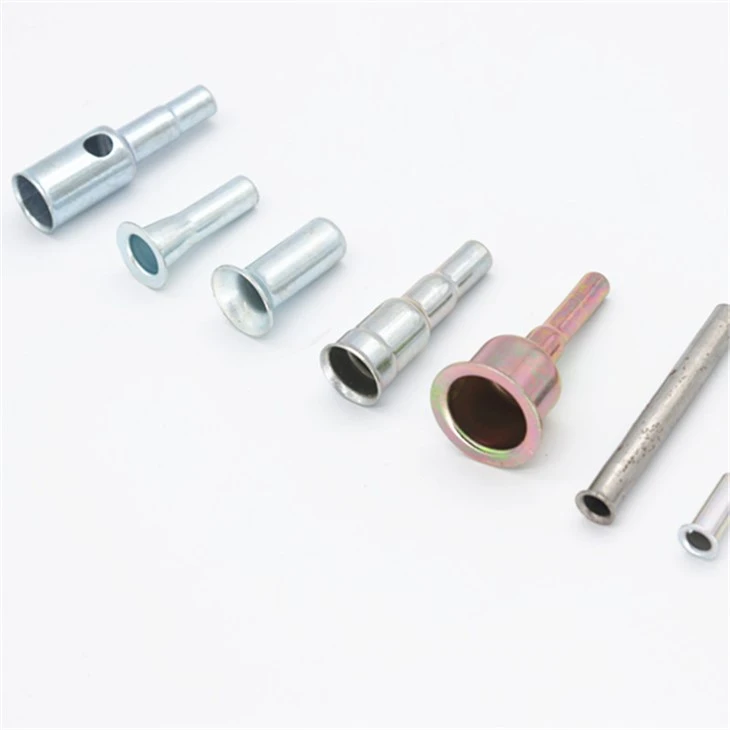
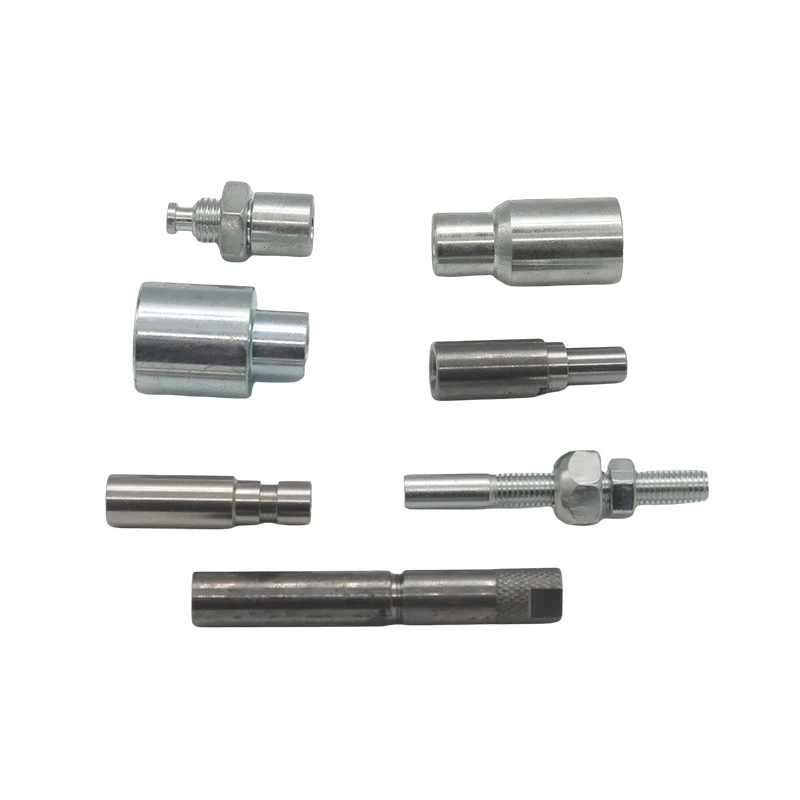
Our company is a professional supplier of spare parts for cable assembly for automobile cable factories. We have CNC turning hardware, cold pier blanks, stamping parts, injection molding plastic products, rubber vulcanization molding rubber parts, etc. Mainly provides cable hose joints, wire rope joints, cable fixing brackets, plastic accessories, rubber accessories and other spare parts products and services to factories.

Ultimate FAQ Guide to Speedometer Cable
Q: Are all speedometer cables the same?
Q: Is the speedometer connected to a fuse?
Q: How tight should a speedometer cable be?
Q: Can you cut a speedometer cable?
Q: Why does a speedometer cable break?
Q: How do speedometers work?
Q: Can I still drive my car if speedometer doesn't work?
Q: Can a blown fuse stop the speedometer?
Q: How does a car know how fast it's going?
Q: What does a bad speedometer cable sound like?
Q: Can a speedometer cable make noise?
Q: Can a blown fuse stop the speedometer?
Q: Why does a speedometer cable break?
Q: How fast does a speedometer cable spin?
Q: How does a speedometer cable work?
Q: Can a broken speedometer cable cause a check engine light?
Q: How tight should a speedometer cable be?
Q: What is the bend radius of a speedometer cable?
Q: What does a bad speedometer cable sound like?
Q: Do cars still have speedometer cables?
Hot Tags: speedometer cable-factory, China speedometer cable-factory manufacturers, suppliers, factory


