

In the automotive industry, every component plays a crucial role in ensuring the safety and performance of a vehicle. One such component that often goes unnoticed but is of utmost importance is the auto brake cable. As a supplier of auto brake cables, I am frequently asked about various aspects of these cables, and one question that comes up quite often is: "Does the length of an auto brake cable matter?" In this blog post, I will delve into this topic and provide a comprehensive answer based on scientific principles and industry experience.
The Basics of Auto Brake Cables
Before we discuss the importance of cable length, let's first understand what an auto brake cable is and how it functions. An auto brake cable is a flexible metal cable that connects the brake pedal or lever to the braking mechanism, such as the drum brakes or disc brakes. When the driver presses the brake pedal, the cable transmits the force from the pedal to the brakes, causing them to engage and slow down or stop the vehicle.
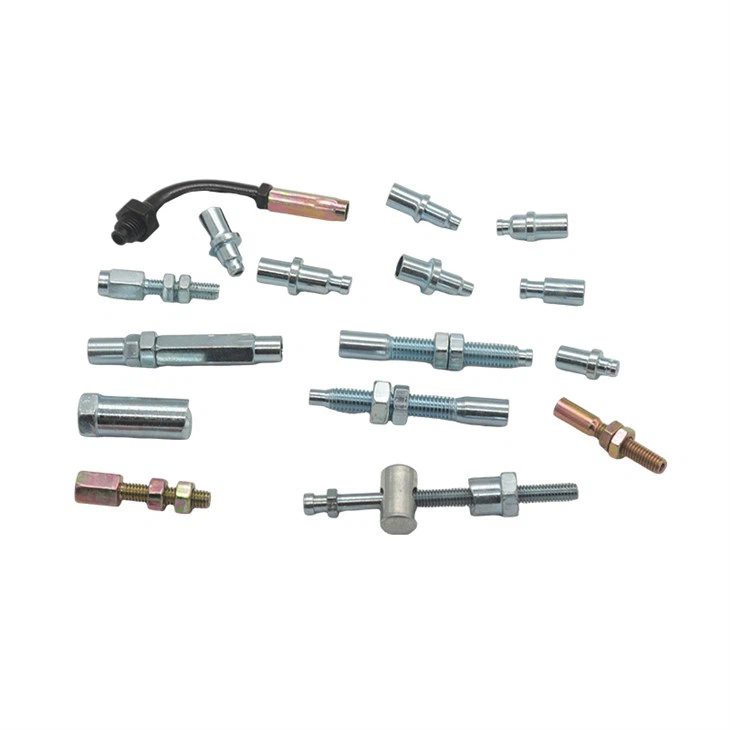

Auto brake cables are typically made of high-strength steel wires that are bundled together and coated with a protective layer to prevent corrosion. They are designed to withstand high levels of tension and stress, as they are responsible for transmitting the force required to stop a moving vehicle.
The Importance of Cable Length
Now, let's address the question at hand: Does the length of an auto brake cable matter? The answer is yes, the length of an auto brake cable does matter, and it can have a significant impact on the performance and safety of a vehicle's braking system. Here are some reasons why:
1. Mechanical Advantage
The length of an auto brake cable affects the mechanical advantage of the braking system. Mechanical advantage refers to the ratio of the output force (the force applied to the brakes) to the input force (the force applied to the brake pedal). A longer cable can provide a greater mechanical advantage, as it allows for a greater distance over which the force can be applied. This means that a longer cable can transmit more force to the brakes, resulting in more effective braking.
However, it's important to note that there is a limit to how long a cable can be. If the cable is too long, it can become slack and lose its ability to transmit force effectively. This can result in a spongy or unresponsive brake pedal, which can be dangerous.
2. Cable Tension
The length of an auto brake cable also affects the tension in the cable. Tension refers to the force that is applied to the cable to keep it taut. A longer cable requires more tension to keep it straight and prevent it from sagging. If the cable is not properly tensioned, it can cause the brakes to engage unevenly or not at all.
On the other hand, if the cable is too short, it can be over-tensioned, which can cause the cable to stretch or break. This can also result in a loss of braking performance and can be dangerous.
3. Cable Flexibility
The length of an auto brake cable can also affect its flexibility. A longer cable is generally more flexible than a shorter cable, which means that it can bend and curve more easily. This can be beneficial in vehicles where the brake cable needs to navigate around obstacles or through tight spaces.
However, too much flexibility can also be a problem. If the cable is too flexible, it can vibrate or move around, which can cause it to wear out more quickly or even break. This can also result in a loss of braking performance and can be dangerous.
Factors to Consider When Choosing the Right Cable Length
When choosing the right length for an auto brake cable, there are several factors that need to be considered. These include:
1. Vehicle Type
The type of vehicle that the cable will be used in is an important factor to consider. Different vehicles have different braking systems and requirements, and the length of the cable will need to be adjusted accordingly. For example, a small car may require a shorter cable than a large truck or SUV.
2. Brake System Design
The design of the vehicle's braking system is also an important factor to consider. Some braking systems require a longer cable to operate effectively, while others may require a shorter cable. It's important to consult the vehicle's owner's manual or a professional mechanic to determine the correct cable length for your specific vehicle.
3. Installation Location
The location where the cable will be installed is another important factor to consider. The cable will need to be long enough to reach from the brake pedal or lever to the brakes, but it also needs to be routed in a way that avoids any obstacles or sharp edges. It's important to measure the distance between the brake pedal and the brakes accurately and to take into account any bends or curves in the cable's path.
4. Cable Material and Construction
The material and construction of the cable can also affect its length requirements. Different materials have different levels of flexibility and strength, and the length of the cable may need to be adjusted accordingly. For example, a cable made of a more flexible material may require a longer length to achieve the same level of mechanical advantage as a cable made of a stiffer material.
Our Auto Brake Cables
As a supplier of auto brake cables, we understand the importance of providing high-quality products that meet the specific needs of our customers. That's why we offer a wide range of auto brake cables in different lengths and configurations to suit a variety of vehicles and applications.
Our auto brake cables are made of high-strength steel wires that are bundled together and coated with a protective layer to prevent corrosion. They are designed to withstand high levels of tension and stress, and they are tested to ensure that they meet or exceed industry standards.
In addition to our standard auto brake cables, we also offer a range of accessories and components to enhance the performance and safety of your vehicle's braking system. These include Zinc Alloy Die Casting Joints, Cable End Fitting, and Speedometer Cable.
Conclusion
In conclusion, the length of an auto brake cable does matter, and it can have a significant impact on the performance and safety of a vehicle's braking system. When choosing the right length for an auto brake cable, it's important to consider factors such as the vehicle type, brake system design, installation location, and cable material and construction.
As a supplier of auto brake cables, we are committed to providing our customers with high-quality products that meet their specific needs. If you have any questions or need assistance in choosing the right auto brake cable for your vehicle, please don't hesitate to contact us. We would be happy to help you find the perfect solution for your braking system.
If you are interested in purchasing our auto brake cables or any of our other products, please feel free to contact us for more information. We look forward to working with you and helping you ensure the safety and performance of your vehicle's braking system.
References
- Automotive Brake Systems: Principles and Diagnosis, by James D. Halderman
- The Automotive Handbook, by Robert Bosch GmbH
- SAE International Standards for Automotive Brake Cables