

Yo, fellow gearheads and industry peeps! I'm a supplier of zinc alloy fittings, and today I wanna chat about how temperature can really mess with these bad boys. You might be thinking, "Temperature? How big of a deal can it be?" Well, let me tell you, it's a pretty huge deal, and understanding it can save you a whole lot of headaches down the line.
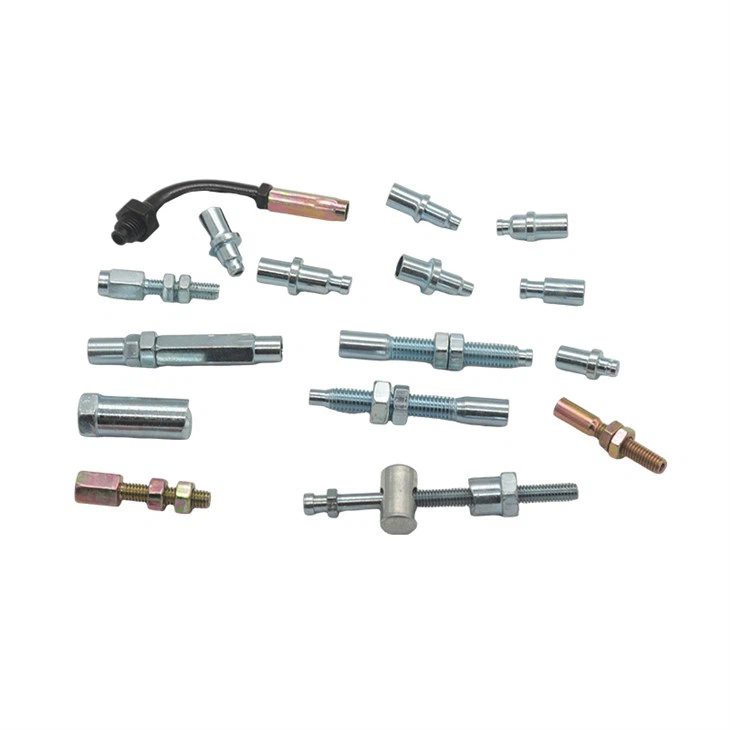
First off, let's get into what zinc alloy fittings are all about. These things are everywhere in the automotive world. You've got Cable End Fitting, Zinc Alloy Die Casting Joints, and Auto Brake Cable. They're used to connect different parts of a vehicle, ensuring that everything works together smoothly. But when temperature comes into play, it can throw a wrench in the works.

Let's start with the cold. When it gets really cold outside, zinc alloy fittings can become brittle. You know how some metals just seem to lose their flexibility when it's freezing? Zinc alloy is no different. The molecules in the alloy start to move around less, and the material becomes stiffer. This can lead to cracks and fractures, especially if the fitting is under any kind of stress.
For example, in a Cable End Fitting, cold temperatures can cause the fitting to break off from the cable. This is a big problem because it can lead to a loss of connection, which means that the part of the vehicle that the cable is supposed to control won't work properly. In the case of an Auto Brake Cable, a broken fitting could mean that your brakes won't engage correctly, and that's a major safety issue.
Another issue with cold temperatures is that they can cause shrinkage. Just like everything else, zinc alloy fittings will contract when it's cold. This can lead to a loss of fit between the fitting and the part it's supposed to connect to. For instance, in Zinc Alloy Die Casting Joints, the joint might become loose, which can cause rattling or even complete disconnection.
Now, let's flip the script and talk about heat. When it gets hot, zinc alloy fittings can expand. This might not seem like a big deal at first, but it can cause some serious problems. For one thing, the expansion can put extra stress on the fitting and the parts it's connected to. If the fitting is already under a lot of pressure, this extra stress can cause it to fail.
In addition, high temperatures can also lead to corrosion. Zinc alloy is relatively resistant to corrosion, but when it's exposed to heat and moisture, it can start to break down. This can weaken the fitting and make it more likely to fail. For example, in a Cable End Fitting, corrosion can cause the fitting to become loose or even fall off.
Another problem with heat is that it can affect the mechanical properties of the zinc alloy. The alloy can become softer and more malleable, which means that it might not be able to withstand the same amount of stress as it could at lower temperatures. This can be a big issue in applications where the fitting needs to be strong and durable, like in an Auto Brake Cable.
So, what can you do to protect your zinc alloy fittings from the effects of temperature? Well, one option is to use insulation. Insulating the fittings can help to keep them at a more stable temperature, which can reduce the risk of expansion and contraction. You can also use protective coatings to prevent corrosion. These coatings can create a barrier between the fitting and the environment, which can help to keep it in good condition.
Another important thing is to choose the right zinc alloy for the job. Different alloys have different properties, and some are more resistant to temperature changes than others. For example, some alloys are better at withstanding high temperatures, while others are more flexible in cold conditions. By choosing the right alloy, you can ensure that your fittings will perform well in a variety of temperature conditions.
As a supplier of zinc alloy fittings, I know how important it is to get these things right. That's why I'm always working to develop new and improved alloys that can withstand the toughest conditions. Whether you're dealing with extreme cold or scorching heat, I've got the fittings you need to keep your vehicles running smoothly.
If you're in the market for high-quality zinc alloy fittings, I'd love to talk to you. Whether you need Cable End Fitting, Zinc Alloy Die Casting Joints, or Auto Brake Cable, I've got you covered. Just reach out, and we can start a conversation about your specific needs. I'm here to help you find the best solutions for your projects.
References
- "Metallurgy for Dummies" by Jeff Granger
- "Automotive Engineering Handbook" edited by Richard Crolla