

Choosing the right die casting fitting isn't just about picking any old part off the shelf. It's a process that requires a good understanding of your requirements, the different types of fittings available, and what makes a quality product. As a die casting fitting supplier, I've seen firsthand how often people make mistakes when it comes to this crucial decision. In this blog, I'll walk you through the key factors you need to consider to choose the right die casting fitting for your needs.
Understanding Your Needs
First things first, you've got to figure out what you actually need the fitting for. Different applications have different requirements, and the fitting you choose has to be up to the task. For instance, if you're dealing with a high - pressure environment, you'll need a fitting that can withstand that pressure without leaking or breaking.
Let's say you're in the automotive industry. You might need fittings for things like a Speedometer Cable. In this case, the fitting has to be precise and reliable, as any malfunction could lead to inaccurate speed readings, which is a big safety concern.
On the other hand, if you're working on a simple DIY project around the house, the requirements might not be as strict. But even then, you still want a fitting that will last and do its job properly.
Material Matters
The material of the die casting fitting is a major factor. Different materials have different properties, and these properties can affect how well the fitting performs in your application.
- Aluminum: It's one of the most commonly used materials for die casting fittings. Aluminum is lightweight, which is great if weight is a concern in your project. It also has good corrosion resistance, so it can be used in a variety of environments. Plus, it's relatively easy to machine, which means you can get the exact shape and size you need.
- Zinc: Zinc die casting fittings are known for their high precision and excellent surface finish. They're also very strong and can be used in applications where strength is important. However, they are a bit heavier than aluminum fittings.
- Magnesium: Magnesium is the lightest of the three commonly used die - casting materials. It has good mechanical properties and is often used in applications where weight reduction is a top priority, such as in the aerospace and automotive industries.
Quality and Precision
When you're choosing a die casting fitting, you can't compromise on quality and precision. A poorly made fitting can cause all sorts of problems, from performance issues to safety hazards.
Quality fittings are made using high - grade raw materials and go through strict quality control processes. They have a smooth surface finish, no cracks or porosity, and precise dimensions. You don't want a fitting that's too loose or too tight, as this can lead to leakage or damage to other components.
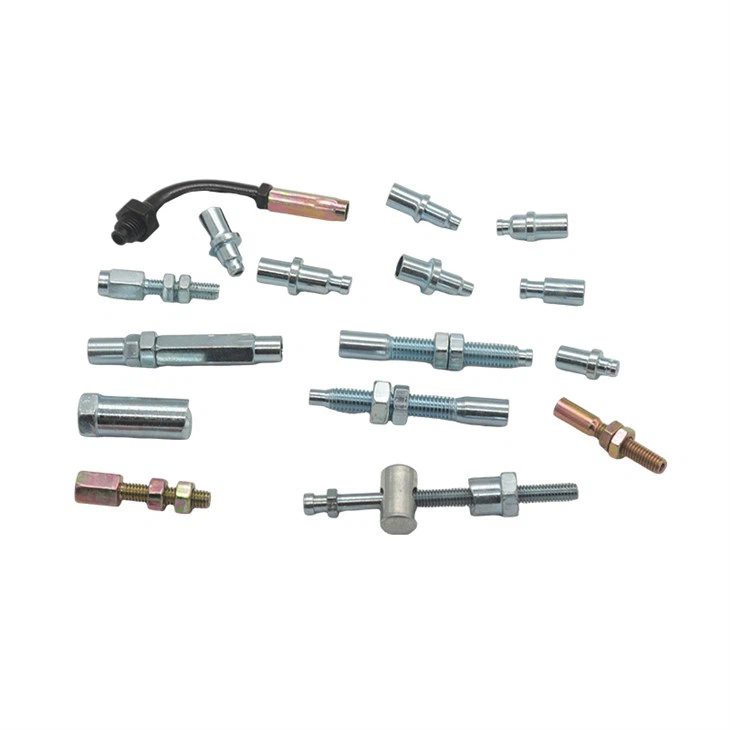

As a supplier, we use state - of - the - art manufacturing techniques to ensure that our fittings meet the highest standards of quality. We also have a team of experts who inspect every single fitting before it leaves the factory.
Compatibility
Another important factor to consider is compatibility. Your fitting has to be compatible with the other components in your system. This includes things like size, shape, and the type of connection.
For example, if you're using a Cable End Fitting, it has to fit snugly onto the cable and be compatible with the device it's connected to. If the fitting isn't compatible, it won't work properly, and you might end up having to replace it.
Cost - Benefit Analysis
Cost is always a consideration when you're choosing a die casting fitting. But you can't just go for the cheapest option. You need to do a cost - benefit analysis.
A more expensive fitting might be made of better quality materials and have a longer lifespan. This means that in the long run, it could actually save you money, as you won't have to replace it as often. On the other hand, if you're on a tight budget and the application isn't too demanding, a more affordable fitting might be a good choice.
Supplier Reputation
The reputation of the supplier matters a lot. A good supplier will not only provide high - quality products but also offer excellent customer service.
As a die casting fitting supplier, we take pride in our reputation. We've been in the business for a long time, and we have a lot of satisfied customers. We offer a wide range of fittings, and we're always willing to work with our customers to find the right solution for their needs.
Customization Options
Sometimes, off - the - shelf fittings just won't cut it. You might need a custom - made fitting that's designed specifically for your application.
A reliable supplier should be able to offer customization options. At our company, we have the expertise and the equipment to create custom die casting fittings. Whether you need a unique shape, size, or material, we can work with you to bring your vision to life.
After - Sales Support
After - sales support is another aspect that shouldn't be overlooked. Things can go wrong, even with the best - made products. A good supplier will stand behind their product and offer support if you encounter any issues.
We offer comprehensive after - sales support to our customers. If you have any questions or problems with our fittings, simply reach out to us, and we'll do our best to help you resolve them.
Conclusion
Choosing the right die casting fitting is a multi - faceted process. You need to understand your needs, consider the material, quality, compatibility, cost, supplier reputation, customization options, and after - sales support.
If you're in the market for high - quality die casting fittings, we'd love to talk to you. Whether you need a standard End Fitting or a custom - made solution, we have the expertise and the resources to meet your requirements. Reach out to us, and let's start a conversation about how we can help you with your next project.
References
- "Die Casting Handbook" by Schaeffer, G. G., & coworkers.
- Industry publications on automotive and mechanical engineering for information on fitting applications and standards.