

Gas porosity is a common and troublesome defect in die casting joints, which can significantly compromise the quality, mechanical properties, and overall performance of the final products. As a seasoned die casting joints supplier, I've encountered this issue numerous times and have gained in - depth knowledge on how to prevent it. In this blog, I'll share some effective strategies and techniques that can help in achieving porosity - free die casting joints.
Understanding Gas Porosity in Die Casting Joints
Before delving into prevention methods, it's crucial to understand what causes gas porosity. Gas porosity occurs when gas is trapped inside the molten metal during the die - casting process. There are several sources of this gas. One common source is the air that gets entrapped when the molten metal fills the die cavity. Another source is the release agents or lubricants used in the die - casting process. These substances can decompose at high temperatures, releasing gases. Additionally, moisture on the die surface or in the raw materials can turn into steam during the casting process, contributing to gas porosity.
Optimizing the Design of Die Casting Joints
The design of the die casting joints plays a vital role in preventing gas porosity. A well - designed joint can ensure smooth and efficient filling of the die cavity, minimizing the chances of gas entrapment.
- Proper Gate and Runner Design: The gate is the entry point for the molten metal into the die cavity, and the runner is the channel that connects the gate to the shot chamber. By designing the gate and runner system correctly, we can control the flow of molten metal. For example, a properly sized gate can ensure that the metal enters the cavity at an appropriate speed. If the gate is too small, the metal may flow too fast, causing turbulence and entraining air. On the other hand, if the gate is too large, the metal may flow too slowly, allowing gas to accumulate.
- Avoiding Sharp Corners and Undercuts: Sharp corners and undercuts in the joint design can create areas where the molten metal flow is restricted, leading to gas entrapment. By using rounded corners and smooth transitions in the design, we can promote a more uniform flow of the molten metal, reducing the likelihood of gas porosity.
Controlling the Die - Casting Process Parameters
Precise control of process parameters is essential for preventing gas porosity in die casting joints.

- Temperature Management: Maintaining the correct temperature of the molten metal and the die is crucial. If the molten metal temperature is too low, it may solidify before all the gas can escape, resulting in porosity. Conversely, if the temperature is too high, it can increase the decomposition of release agents and lubricants, generating more gas. We need to carefully monitor and adjust the temperature based on the type of metal and the specific requirements of the die casting joint.
- Injection Speed and Pressure: The injection speed and pressure determine how the molten metal fills the die cavity. A high injection speed can cause turbulence and gas entrapment, while a low injection speed may not be sufficient to fill the cavity completely. Similarly, the injection pressure should be optimized to ensure proper filling without introducing excessive gas. We often conduct tests and simulations to find the optimal injection speed and pressure for each die casting joint.
Managing Raw Materials and Release Agents
The quality of raw materials and the proper use of release agents can also have a significant impact on gas porosity.
- Raw Material Quality: Using high - quality raw materials is essential. The raw materials should be free from contaminants, moisture, and other impurities that can generate gas during the casting process. We source our raw materials from reliable suppliers and conduct strict quality control checks before using them in the die - casting process.
- Release Agent Selection and Application: Release agents are used to facilitate the removal of the cast part from the die. However, if not used correctly, they can be a major source of gas porosity. We need to select release agents that have low gas - generating properties and apply them in the right amount. Over - application of release agents can lead to excessive gas generation, while under - application may cause sticking issues.
Utilizing Vacuum and Gas - Flushing Techniques
In some cases, using vacuum or gas - flushing techniques can be very effective in preventing gas porosity.
- Vacuum Die Casting: Vacuum die casting involves creating a vacuum in the die cavity before injecting the molten metal. This reduces the amount of air and gas in the cavity, minimizing the chances of gas entrapment. We have invested in advanced vacuum die - casting equipment that can achieve high - quality results with significantly reduced porosity.
- Gas - Flushing: Gas - flushing is another technique where an inert gas, such as nitrogen, is used to displace the air in the die cavity. This can help to reduce the oxygen content and prevent the formation of oxides and gas porosity. We have successfully implemented gas - flushing techniques in our production process, especially for high - precision die casting joints.
Quality Control and Inspection
Implementing a comprehensive quality control and inspection system is crucial for ensuring that the die casting joints are free from gas porosity.
- Non - Destructive Testing: We use non - destructive testing methods, such as X - ray inspection and ultrasonic testing, to detect gas porosity in the die casting joints. These methods allow us to identify porosity without damaging the parts, enabling us to take corrective actions early in the production process.
- Statistical Process Control: By implementing statistical process control (SPC), we can monitor and analyze the production process data to identify trends and potential issues related to gas porosity. This helps us to make timely adjustments to the process parameters and prevent the recurrence of porosity problems.
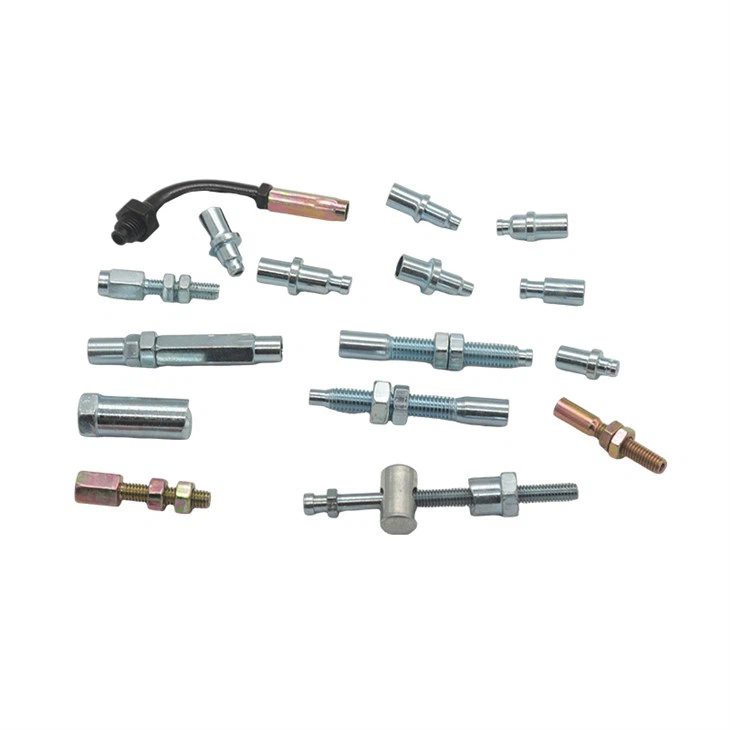
As a die casting joints supplier, we are committed to providing high - quality products with minimal gas porosity. Our products, such as Cable End Fitting, Adjustable Screw Joint, and Auto Brake Cable, are manufactured using the latest technologies and strict quality control measures.
If you are in the market for high - quality die casting joints, we invite you to contact us for procurement and further discussions. Our team of experts is ready to assist you in finding the best solutions for your specific requirements.
References
- Campbell, J. (2003). Castings. Butterworth - Heinemann.
- Davis, J. R. (Ed.). (2008). Aluminum and Aluminum Alloys. ASM International.
- Doherty, D. G., & Dantzig, J. A. (2012). Metal Casting: A Practical Guide. McGraw - Hill Professional.