

Hey there! As a supplier of zinc alloy joints, I often get asked about the best environmental storage conditions for these products. So, I thought I'd share some insights on this topic to help you keep your zinc alloy joints in top - notch condition.
First off, let's talk about temperature. Zinc alloy joints are pretty sensitive to extreme temperatures. You don't want to store them in places that are too hot or too cold. High temperatures can cause the zinc alloy to expand. This expansion might lead to changes in the shape and dimensions of the joints. Over time, these dimensional changes can affect how well the joints fit and function. On the flip side, extremely cold temperatures can make the alloy more brittle. A brittle joint is more likely to crack or break when it's handled or used.
The ideal temperature range for storing zinc alloy joints is between 20°C and 30°C (68°F - 86°F). This range is kind of like a Goldilocks zone for these joints - it's not too hot, not too cold, just right. In this temperature range, the zinc alloy maintains its structural integrity and mechanical properties. If you're storing the joints in a warehouse, you might need to invest in some climate - control equipment to keep the temperature stable.
Now, let's move on to humidity. Humidity can be a real enemy of zinc alloy joints. High humidity levels can lead to corrosion. Zinc alloy, like many metals, reacts with moisture in the air to form oxides. These oxides can eat away at the surface of the joints, weakening them over time. You'll start to notice rust spots or a powdery substance on the joints, which are clear signs of corrosion.
To prevent this, you should aim to keep the relative humidity in the storage area below 60%. You can use dehumidifiers to achieve this. A dehumidifier will suck the excess moisture out of the air, creating a drier environment for your joints. If you don't have a dehumidifier, you can also use desiccants. Silica gel packets are a common and inexpensive option. You can place these packets in the storage containers with the joints to absorb any moisture.
Another important factor is light. Prolonged exposure to direct sunlight or intense artificial light can also have a negative impact on zinc alloy joints. Ultraviolet (UV) rays in sunlight can cause the surface of the alloy to degrade. This degradation can lead to discoloration and a loss of the joint's protective coating. If the protective coating is damaged, the joint becomes more vulnerable to corrosion.
So, it's best to store zinc alloy joints in a dark or dimly - lit area. If you're using storage cabinets, make sure they are opaque or have a light - blocking cover. And if you have the joints on display, try to use UV - blocking glass or shields to protect them from harmful light.
Now, let's talk about the storage location itself. You want to store the joints in a clean and dust - free environment. Dust can accumulate on the surface of the joints and act as an abrasive. When the joints are moved or handled, the dust can scratch the surface, which can then lead to corrosion.
It's also important to keep the joints away from any sources of chemicals or pollutants. Chemical fumes, such as those from solvents, acids, or alkalis, can react with the zinc alloy and cause damage. If your storage area is near a chemical processing area or a place with a lot of industrial pollution, you need to take extra precautions. You might consider using sealed storage containers or a separate, well - ventilated storage room.
When it comes to the physical arrangement of the joints during storage, you should avoid overcrowding. If the joints are stacked too closely together, they can rub against each other. This friction can cause scratches on the surface of the joints, which as I mentioned earlier, can lead to corrosion. You should use dividers or trays to keep the joints separated.

Also, make sure the joints are stored in a way that they are not under any unnecessary stress. For example, if you have long, thin joints, don't stack heavy objects on top of them. This can cause the joints to bend or deform.
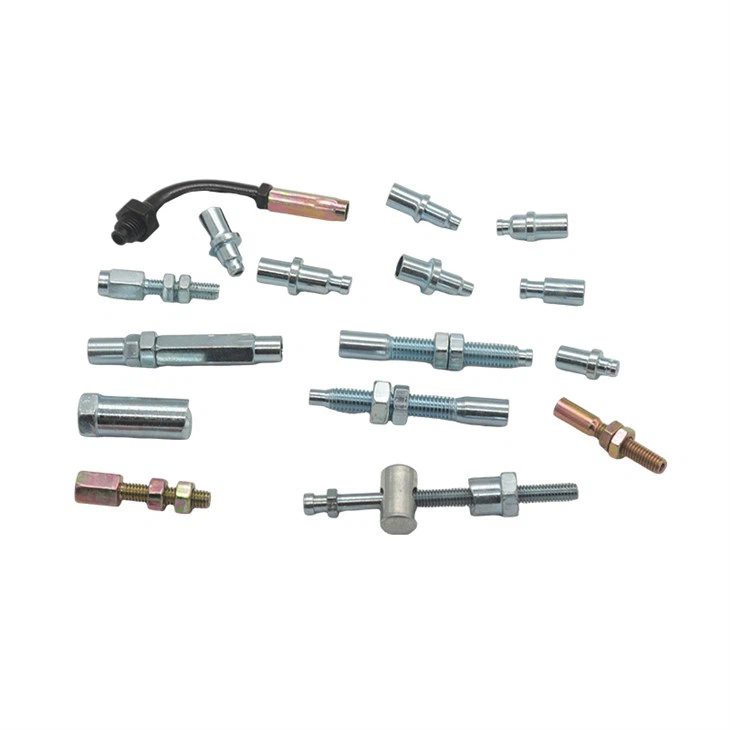
At our company, we offer a wide range of zinc alloy joints, including Cable End Fitting, Adjustable Screw Joint, and Push Pull Cable. All of these products are made with high - quality zinc alloy and are designed to meet the highest standards of performance.
We understand that proper storage is crucial for maintaining the quality of these products. That's why we always provide our customers with detailed instructions on how to store and handle our zinc alloy joints. By following these environmental storage conditions, you can ensure that your joints will last longer and perform better.
If you're in the market for zinc alloy joints, we'd love to hear from you. Whether you're a small - scale manufacturer or a large - scale distributor, we have the products and the expertise to meet your needs. Contact us to start a procurement discussion and find out how our zinc alloy joints can benefit your business.
References
- ASM Handbook Volume 2: Properties and Selection: Nonferrous Alloys and Special - Purpose Materials
- Corrosion Basics: An Introduction by Mars G. Fontana