

Die casting joints are crucial components in various industries, offering high precision and durability. As a die casting joints supplier, we understand the importance of post - processing steps to ensure the quality and functionality of these products. In this blog, we will delve into the key post - processing steps for die casting joints.
1. Trimming
The first step in post - processing die casting joints is trimming. During the die casting process, excess material, known as flash, is often formed around the edges of the casting. Flash can occur due to the molten metal seeping into the gaps between the die halves. Trimming is essential to remove this excess material and give the die casting joint its proper shape and dimensions.
We use a variety of trimming methods, depending on the complexity of the part and the material. For simple geometries, mechanical trimming with presses and dies can be highly effective. This method involves placing the casting in a die and using a press to cut off the flash. For more complex parts, CNC machining may be required. CNC machining offers greater precision and can be used to trim difficult - to - reach areas. Zinc Alloy Die Casting Joints often require precise trimming to ensure a proper fit in automotive applications.
2. Deburring
After trimming, deburring is the next important step. Burrs are small, sharp edges or projections that remain on the surface of the casting after trimming. These burrs can be a safety hazard during handling and can also affect the functionality of the die casting joint.
There are several deburring techniques available. Manual deburring using files, sandpaper, or abrasive stones is a common method for small - scale production or parts with delicate features. For larger - scale production, automated deburring machines can be used. These machines use brushes, abrasive belts, or chemical processes to remove burrs. Chemical deburring is particularly useful for complex parts with internal burrs that are difficult to reach by other methods. Deburring is crucial for products like Cable End Fitting, where smooth surfaces are required to prevent damage to cables.
3. Heat Treatment
Heat treatment is a post - processing step that can significantly improve the mechanical properties of die casting joints. The main purposes of heat treatment include enhancing strength, hardness, and ductility, as well as relieving internal stresses.
One common heat treatment method for die casting joints is annealing. Annealing involves heating the casting to a specific temperature and then slowly cooling it. This process helps to relieve internal stresses caused by the die casting process and makes the material more ductile. Another heat treatment method is quenching and tempering. Quenching involves rapidly cooling the heated casting in a liquid medium, such as oil or water, to increase its hardness. Tempering is then performed to reduce the brittleness induced by quenching and improve the overall toughness of the material. Heat - treated die casting joints are often used in applications where high strength and durability are required, such as in Push Pull Cable systems.
4. Surface Finishing
Surface finishing is an important post - processing step that not only improves the appearance of die casting joints but also provides protection against corrosion and wear. There are several surface finishing techniques available.
One of the most common surface finishing methods is plating. Plating involves depositing a thin layer of metal, such as chrome, nickel, or zinc, on the surface of the casting. Plating provides a protective barrier against corrosion and can also enhance the aesthetic appeal of the product. Another surface finishing technique is powder coating. Powder coating involves applying a dry powder to the surface of the casting and then heating it to form a hard, durable finish. Powder coating is available in a wide range of colors and can provide excellent resistance to scratches and chemicals. Additionally, painting can be used for surface finishing, especially for applications where a specific color or appearance is required.
5. Machining
In some cases, additional machining may be required after the initial die casting and post - processing steps. Machining can be used to achieve higher precision in dimensions, create specific features such as threads or holes, and improve the surface finish.
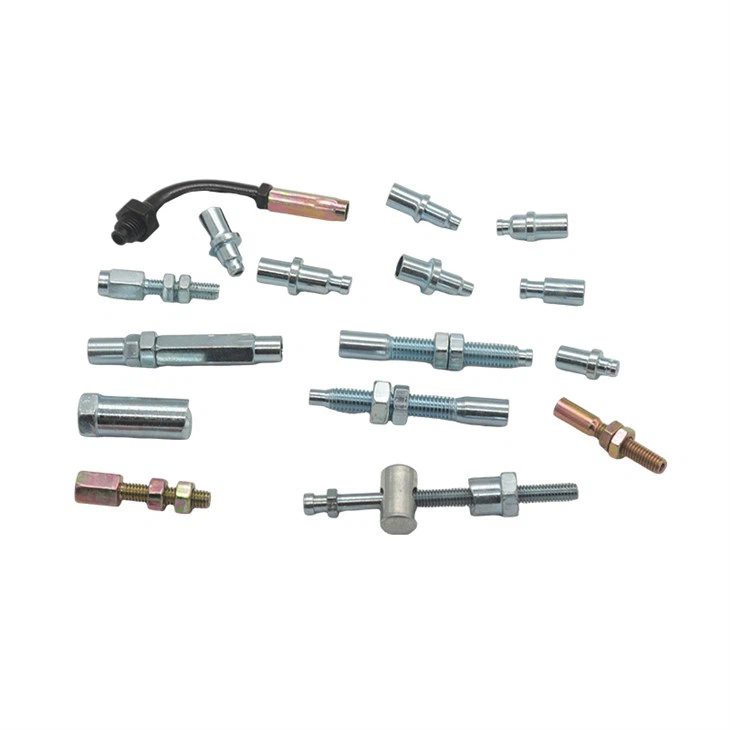

CNC machining is a popular choice for machining die casting joints. It offers high precision and can be programmed to produce complex shapes and features. Lathes, milling machines, and drills are commonly used in the machining process. Machining is often necessary for die casting joints that need to be integrated with other components, ensuring a perfect fit and functionality.
6. Quality Inspection
Quality inspection is a crucial post - processing step to ensure that the die casting joints meet the required standards and specifications. There are several inspection methods available.
Visual inspection is the most basic form of quality inspection. It involves visually examining the casting for defects such as cracks, porosity, and surface flaws. Dimensional inspection using tools such as calipers, micrometers, and coordinate measuring machines (CMMs) is used to ensure that the dimensions of the casting are within the specified tolerances. Non - destructive testing methods, such as X - ray inspection and ultrasonic testing, can be used to detect internal defects that are not visible to the naked eye. Only after passing a comprehensive quality inspection can the die casting joints be considered ready for shipment.
7. Packaging
The final post - processing step is packaging. Proper packaging is essential to protect the die casting joints during transportation and storage.
We use a variety of packaging materials, such as plastic bags, foam inserts, and cardboard boxes. Plastic bags can provide a protective barrier against moisture and dust, while foam inserts can prevent the castings from moving and getting damaged during transit. Cardboard boxes are used for larger shipments and can be labeled with important information such as product name, quantity, and handling instructions.
As a die casting joints supplier, we are committed to providing high - quality products. Our strict adherence to these post - processing steps ensures that our die casting joints meet the highest standards of quality and performance. If you are in need of die casting joints for your project, we invite you to contact us for procurement discussions. We look forward to working with you to meet your specific requirements.
References
- Campbell, J. (2003). Castings. Butterworth - Heinemann.
- Kalpakjian, S., & Schmid, S. R. (2014). Manufacturing Engineering and Technology. Pearson.
- ASM Handbook Committee. (2008). ASM Handbook, Volume 5: Surface Engineering. ASM International.