

Hey there! As an auto push pull cable supplier, I've been getting a lot of questions lately about the difference between push - only and push - pull auto cables. So, I thought I'd write this blog to clear things up for all you folks out there who are looking to understand these cables better.
Let's start with the basics. Push - only auto cables, as the name suggests, are designed to transmit force in one direction: pushing. These cables are typically used in applications where you only need to apply pressure to move something forward. For example, they can be used in simple mechanical systems where you're just trying to actuate a lever or a switch by pushing on it.
On the other hand, push - pull auto cables are more versatile. They're capable of transmitting force in both the pushing and pulling directions. This means they can be used in a wider range of applications. In an automotive context, a push - pull cable might be used to control things like throttle linkages, where you need to be able to both increase and decrease the throttle position.
One of the key differences between the two types of cables lies in their internal construction. Push - only cables usually have a simpler design. They often consist of a single core wire inside a protective outer sheath. The core wire is responsible for transmitting the pushing force, and the sheath helps to protect it from damage and reduce friction.
Push - pull cables, however, need to be more robust. They typically have a more complex construction to handle the dual - direction forces. The core wire might be made of a stronger material, and there could be additional layers or reinforcements in the sheath to prevent it from kinking or breaking when pulled.
Another difference is in their flexibility. Push - only cables are generally more flexible because they don't need to withstand the same kind of pulling forces. This makes them easier to route around tight corners and through narrow spaces in a vehicle. Push - pull cables, while still flexible to some extent, may be a bit stiffer due to their stronger construction.
When it comes to durability, push - pull cables usually have an edge. Since they're designed to handle both pushing and pulling, they're built to be more resistant to wear and tear. Push - only cables, while they can last a long time in the right applications, may not hold up as well if they're subjected to pulling forces they're not designed for.
Now, let's talk about the applications in more detail. Push - only cables are commonly used in systems where you're just trying to actuate a single - action mechanism. For instance, in some older cars, they were used to operate the choke. You'd push the cable to engage the choke and enrich the fuel mixture when starting the engine.
Push - pull cables, on the other hand, are used in a variety of critical automotive systems. The aforementioned throttle control is a prime example. They're also used in gearshift linkages, where you need to be able to both select and deselect gears by pushing and pulling the cable. And in some braking systems, push - pull cables can be used to operate auxiliary brakes or parking brakes.
If you're in the market for auto cables, it's important to choose the right type for your application. Using a push - only cable where a push - pull cable is required can lead to premature failure and potentially dangerous situations. Conversely, using a push - pull cable when a push - only cable would suffice can be overkill and may cost you more.
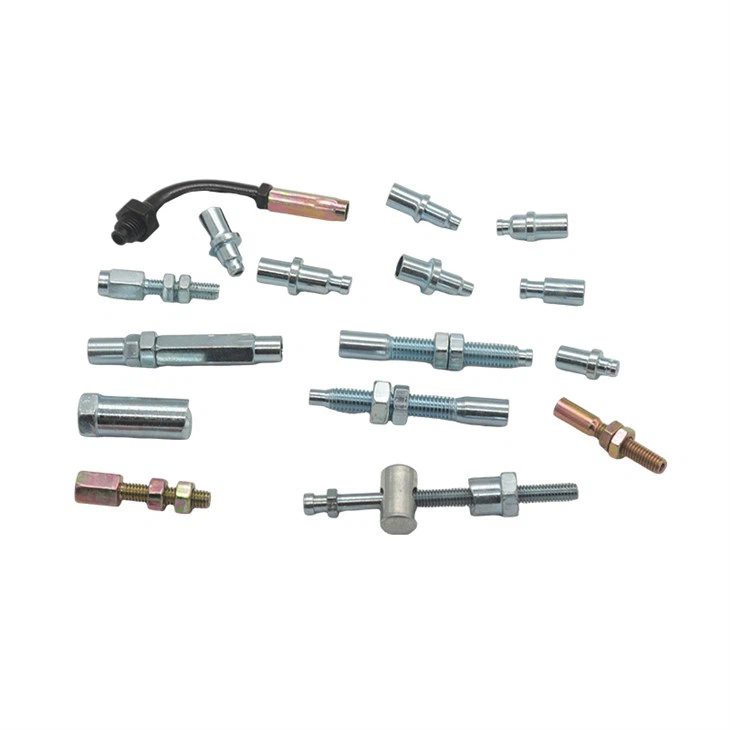
As an auto push pull cable supplier, I offer a wide range of both push - only and push - pull cables. Our Push Pull Cable products are designed to meet the highest standards of quality and performance. We also provide Cable End Fitting options to ensure a perfect fit for your specific needs. And if you're looking for Auto Brake Cable, we've got you covered there too.
Whether you're a mechanic working on a classic car restoration project or a manufacturer looking for reliable cables for your new vehicles, we can help. Our team of experts is always on hand to answer any questions you may have and to assist you in choosing the right cable for your application.
If you're interested in learning more about our products or would like to discuss a potential purchase, don't hesitate to get in touch. We're eager to work with you and help you find the perfect auto cables for your needs.

In conclusion, understanding the difference between push - only and push - pull auto cables is crucial for anyone involved in the automotive industry. By choosing the right type of cable, you can ensure the safety, reliability, and performance of your vehicles. So, take the time to evaluate your needs and make an informed decision. And remember, as your trusted auto push pull cable supplier, we're here to support you every step of the way.
References
- Automotive Cable Handbook, various industry publications
- Interviews with automotive engineers and technicians