

Fatigue resistance is a critical property when it comes to zinc alloy fittings. As a supplier of zinc alloy fittings, I have witnessed firsthand the importance of understanding and optimizing this characteristic. In this blog post, I will delve into what fatigue resistance means for zinc alloy fittings, its significance in various applications, and how we ensure high - quality fatigue - resistant products.
Understanding Fatigue Resistance
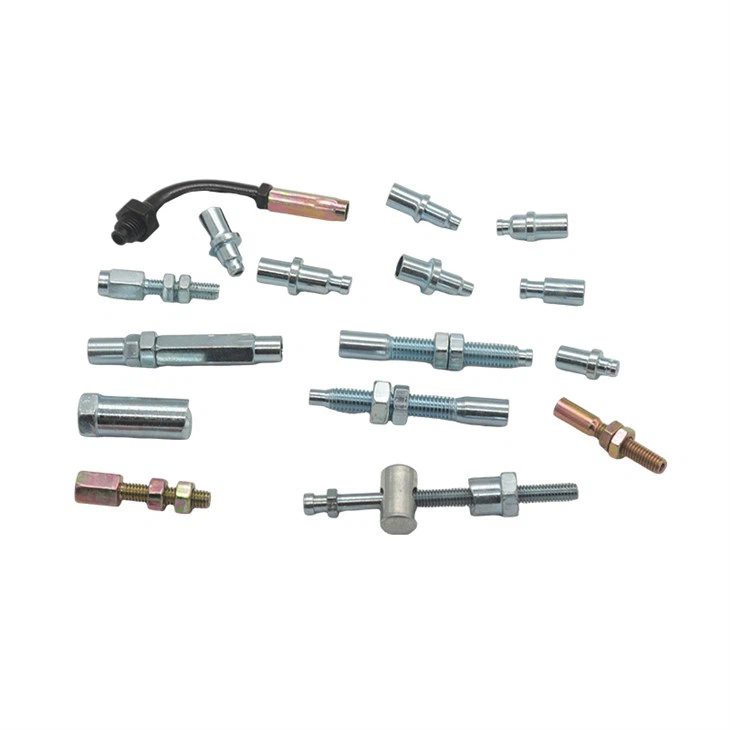
Fatigue resistance refers to a material's ability to withstand repeated loading and unloading cycles without failing. When a zinc alloy fitting is in use, it often experiences cyclic stresses. These stresses can be caused by various factors such as vibrations, dynamic forces, or changes in temperature. For example, in automotive applications, Cable End Fitting are subjected to constant movement and forces as the vehicle operates. Over time, if the fitting does not have good fatigue resistance, it may develop cracks or fractures, which can lead to system failures.
The mechanism behind fatigue failure in zinc alloy fittings starts with the initiation of micro - cracks. These micro - cracks usually form at stress concentration points, such as surface defects, notches, or areas with high internal stresses. As the cyclic loading continues, these micro - cracks gradually grow and propagate through the material. Eventually, the crack becomes large enough to cause the fitting to break.
Factors Affecting the Fatigue Resistance of Zinc Alloy Fittings
Alloy Composition
The composition of the zinc alloy plays a crucial role in determining its fatigue resistance. Different alloying elements can have different effects on the material's properties. For instance, adding small amounts of copper to a zinc alloy can improve its strength and hardness, which in turn can enhance fatigue resistance. Copper forms solid solutions with zinc, which helps to strengthen the crystal structure of the alloy. On the other hand, impurities in the alloy can act as stress concentration points and reduce fatigue resistance. Therefore, we carefully control the alloy composition during the manufacturing process to ensure optimal performance.
Manufacturing Process
The manufacturing process also has a significant impact on the fatigue resistance of zinc alloy fittings. Processes such as die - casting, which is commonly used for producing zinc alloy fittings, can introduce internal stresses and surface defects. However, proper heat treatment and surface finishing can help to relieve internal stresses and improve the surface quality. For example, shot peening is a surface treatment method that can introduce compressive stresses on the surface of the fitting. These compressive stresses counteract the tensile stresses generated during cyclic loading, thus increasing fatigue resistance.
Design
The design of the zinc alloy fitting is another important factor. A well - designed fitting should have a smooth and uniform shape to avoid stress concentration. Sharp corners and sudden changes in cross - section can significantly reduce fatigue resistance. For example, in the design of Bowden Cable fittings, we use rounded edges and gradual transitions to ensure that the stress is evenly distributed throughout the fitting.
Significance of Fatigue Resistance in Different Applications
Automotive Industry
In the automotive industry, zinc alloy fittings are widely used in various components. Speedometer Cable fittings, for example, need to have high fatigue resistance because they are constantly exposed to vibrations and dynamic forces while the vehicle is in motion. A failure of a speedometer cable fitting can lead to inaccurate speed readings or even a complete loss of the speedometer function. Similarly, cable end fittings used in the braking system or the transmission system must be able to withstand repeated loading to ensure the safety and reliability of the vehicle.
Electrical Industry
In the electrical industry, zinc alloy fittings are used in connectors and terminals. These fittings are often subjected to cyclic thermal stresses due to the heating and cooling cycles during normal operation. Good fatigue resistance is essential to prevent the development of cracks, which could lead to poor electrical contact and potential safety hazards.
Construction Industry
In the construction industry, zinc alloy fittings are used in structural applications such as window and door hardware. These fittings need to withstand the forces exerted by opening and closing operations over a long period. Fatigue - resistant zinc alloy fittings ensure the durability and functionality of these components, reducing the need for frequent replacements.
How We Ensure High Fatigue Resistance in Our Zinc Alloy Fittings
As a supplier, we take several measures to ensure that our zinc alloy fittings have high fatigue resistance. First, we use high - quality raw materials with precise alloy compositions. Our suppliers are carefully selected, and we conduct strict quality control checks on the incoming materials.
Second, we optimize our manufacturing processes. We have advanced die - casting equipment and a team of experienced technicians who can control the process parameters to minimize internal stresses and surface defects. After the casting process, we perform heat treatment and surface finishing operations to improve the material's properties.
Third, we use advanced design techniques. Our design team uses computer - aided design (CAD) software to simulate the stress distribution in the fittings during cyclic loading. This allows us to optimize the shape and dimensions of the fittings to ensure even stress distribution and high fatigue resistance.
Finally, we conduct rigorous testing on our products. We use fatigue testing machines to simulate real - world cyclic loading conditions and measure the fatigue life of our fittings. Only products that meet our strict quality standards are released to the market.
Conclusion
In conclusion, fatigue resistance is a vital property for zinc alloy fittings. It determines the durability and reliability of these fittings in various applications, from automotive to electrical and construction industries. As a supplier, we are committed to providing high - quality zinc alloy fittings with excellent fatigue resistance. By carefully controlling the alloy composition, manufacturing process, and design, and by conducting thorough testing, we ensure that our products can meet the demanding requirements of our customers.

If you are in need of high - quality zinc alloy fittings with excellent fatigue resistance, we would be more than happy to discuss your specific needs. Contact us to start a procurement negotiation and find the best solutions for your projects.
References
- "Materials Science and Engineering: An Introduction" by William D. Callister Jr. and David G. Rethwisch
- "Fatigue of Materials" by Norman E. Dowling
- Industry reports on the application of zinc alloy fittings in automotive, electrical, and construction industries.