

As a supplier of adjustable screw joints, I've often been asked about the maximum adjustment speed of these essential components. In this blog post, I'll delve into the factors that influence the maximum adjustment speed of an adjustable screw joint, share some real - world insights, and offer guidance on how to optimize this speed for different applications.

Understanding Adjustable Screw Joints
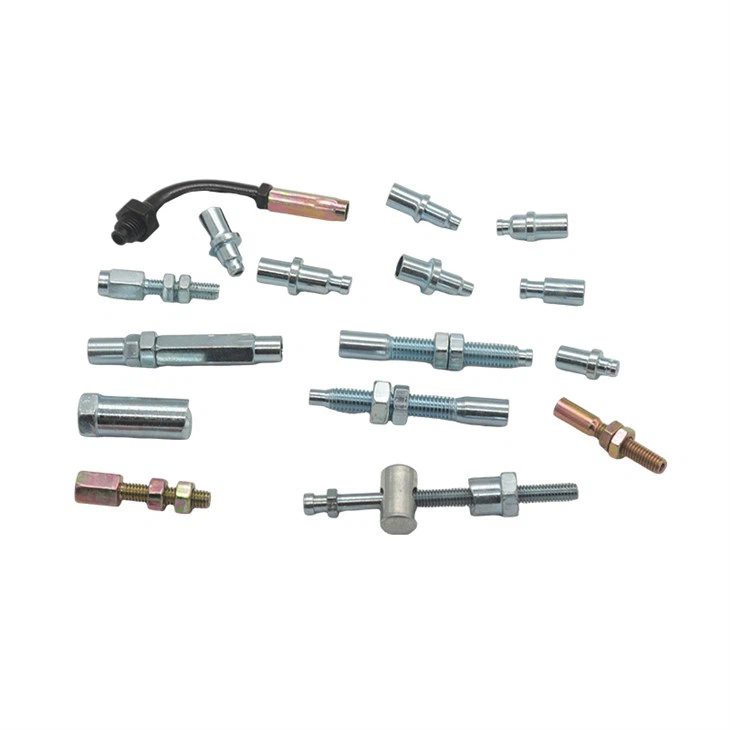
Adjustable screw joints are mechanical devices that allow for precise and controlled adjustment of position, tension, or alignment. They are widely used in various industries, including automotive, aerospace, manufacturing, and robotics. The basic design of an adjustable screw joint consists of a screw and a nut, where the rotation of the screw causes linear movement of the nut, enabling the desired adjustment.
Factors Affecting the Maximum Adjustment Speed
- Thread Pitch
The thread pitch of the screw is one of the most significant factors affecting the adjustment speed. A larger thread pitch means that for each full rotation of the screw, the nut moves a greater distance. For example, a screw with a pitch of 2mm will move the nut 2mm for every full turn, while a screw with a pitch of 1mm will only move the nut 1mm. Therefore, all else being equal, a larger thread pitch allows for a faster adjustment speed. However, a larger pitch may also result in reduced precision, as the movement per turn is coarser. - Material and Friction
The materials used for the screw and nut, as well as the lubrication between them, play a crucial role in determining the adjustment speed. Friction between the screw and nut can slow down the adjustment process. High - quality materials with low coefficients of friction, such as stainless steel or certain types of polymers, can reduce this friction and allow for smoother and faster movement. Additionally, proper lubrication can further minimize friction and improve the adjustment speed. For instance, using a specialized anti - friction lubricant can significantly enhance the performance of the adjustable screw joint. - Torque and Power Source
The torque applied to the screw and the power source used to drive the adjustment also impact the maximum adjustment speed. A higher torque can overcome the resistance and move the nut more quickly. Electric or pneumatic power tools can provide greater torque compared to manual operation, enabling faster adjustments. However, it's important to ensure that the power source is properly matched to the screw joint to avoid over - stressing the components. - Load and Resistance
The load on the adjustable screw joint and any external resistance it encounters can limit the adjustment speed. If the joint is supporting a heavy load or facing significant resistance, such as in a high - pressure application, more force is required to move the nut. This can slow down the adjustment process and may even require a more powerful power source or a different screw design to achieve an acceptable speed.
Real - World Applications and Optimal Speeds
- Automotive Industry
In the automotive industry, adjustable screw joints are used in various applications, such as Speedometer Cable adjustments and suspension tuning. For speedometer cable adjustments, a relatively fast adjustment speed may be required during the manufacturing process to ensure efficient production. However, precision is also important to ensure accurate speedometer readings. In suspension tuning, the adjustment speed may be slower, as it often requires careful and precise calibration to achieve the desired ride quality and handling characteristics. - Aerospace Industry
Aerospace applications demand the highest levels of precision and reliability. Adjustable screw joints in aerospace components, such as control surfaces and landing gear mechanisms, need to be adjusted with extreme accuracy. While the adjustment speed may not be the primary concern, it still needs to be optimized to minimize maintenance time. The materials used in aerospace screw joints are often lightweight and high - strength, and the adjustment is typically done using specialized tools under strict quality control procedures. - Manufacturing and Robotics
In manufacturing and robotics, adjustable screw joints are used for positioning and alignment of components. The adjustment speed is crucial for maximizing productivity. High - speed robotic systems may require screw joints with large thread pitches and powerful power sources to achieve rapid adjustments. However, the precision of these adjustments must also be maintained to ensure the quality of the manufactured products.
Measuring and Testing the Maximum Adjustment Speed
To determine the maximum adjustment speed of an adjustable screw joint, it's necessary to conduct tests under controlled conditions. This can involve measuring the time it takes to move the nut a certain distance for a given screw rotation speed and torque. The tests should be repeated multiple times to account for any variations in the measurement. Additionally, it's important to consider the environmental conditions, such as temperature and humidity, as they can also affect the performance of the screw joint.
Optimizing the Adjustment Speed
- Selecting the Right Screw Design
Based on the specific application requirements, choose a screw with an appropriate thread pitch and diameter. Consider the balance between adjustment speed and precision. If high - speed adjustment is the primary goal, a larger thread pitch may be suitable, but if precision is crucial, a smaller pitch should be selected. - Using High - Quality Materials and Lubrication
Invest in high - quality materials for the screw and nut to reduce friction. Regularly apply appropriate lubricants to ensure smooth operation. This can not only improve the adjustment speed but also extend the lifespan of the screw joint. - Proper Power Source Selection
Match the power source to the screw joint requirements. If a fast adjustment speed is needed, use a power tool with sufficient torque. Ensure that the power source is easy to control to avoid over - adjustment or damage to the components.
Conclusion
The maximum adjustment speed of an adjustable screw joint is influenced by multiple factors, including thread pitch, material, friction, torque, load, and resistance. By understanding these factors and optimizing the design and operation of the screw joint, it's possible to achieve the desired adjustment speed for different applications.
If you're in the market for high - quality adjustable screw joints or need more information on how to optimize their performance, I encourage you to reach out to me. I'm committed to providing the best solutions for your specific needs. Whether you're working on an automotive project, an aerospace application, or a manufacturing process, I can offer expert advice and a wide range of adjustable screw joints to meet your requirements. Let's start a conversation and explore how we can work together to achieve your goals.
References
- Mechanical Engineering Design Handbook, 3rd Edition
- Automotive Engineering Textbook, 2nd Edition
- Aerospace Materials and Structures Manual