

As a supplier of Adjustable Screw Joints, I often encounter questions from customers about the shock resistance of these crucial components. In this blog post, I'll delve into what shock resistance means in the context of adjustable screw joints, why it matters, and how our products are designed to withstand various levels of shock.
Understanding Shock Resistance
Shock resistance refers to the ability of a material or component to absorb and dissipate the energy generated by sudden impacts or vibrations without suffering significant damage or losing its functionality. In the case of an adjustable screw joint, shock resistance is essential because these joints are commonly used in applications where they may be subjected to sudden jolts, such as in automotive, industrial machinery, and aerospace systems.
When a shock occurs, the energy is transferred through the adjustable screw joint. If the joint cannot handle this energy effectively, it may experience deformation, loosening of the screw, or even breakage. This can lead to a loss of structural integrity, misalignment of components, and ultimately, failure of the entire system.
Factors Affecting Shock Resistance
Several factors influence the shock resistance of an adjustable screw joint. These include the material used, the design of the joint, and the manufacturing process.
Material Selection
The choice of material is crucial in determining the shock resistance of an adjustable screw joint. High-strength materials such as stainless steel, alloy steel, and titanium are commonly used because they offer excellent mechanical properties, including high tensile strength and toughness. These materials can absorb a significant amount of energy before reaching their yield point, making them less likely to deform or break under shock loading.
For example, stainless steel is known for its corrosion resistance and high strength-to-weight ratio. It is often used in applications where the adjustable screw joint will be exposed to harsh environments or where a high level of durability is required. Alloy steel, on the other hand, can be heat-treated to achieve specific mechanical properties, making it suitable for applications with high shock loads.
Design Considerations
The design of the adjustable screw joint also plays a significant role in its shock resistance. A well-designed joint will distribute the shock load evenly across its components, reducing the stress concentration at any one point. This can be achieved through features such as a tapered thread design, which helps to prevent the screw from loosening under vibration, and a locking mechanism, which secures the joint in place.
Another important design consideration is the size and shape of the joint. A larger joint may be able to withstand more shock than a smaller one, but it may also be heavier and more expensive. Therefore, the design must be optimized to balance the requirements of shock resistance, weight, and cost.
Manufacturing Process
The manufacturing process can also affect the shock resistance of an adjustable screw joint. Precision machining techniques, such as CNC machining, ensure that the threads are accurately formed and that the dimensions of the joint are within the required tolerances. This helps to ensure a proper fit between the screw and the nut, reducing the likelihood of loosening or failure under shock loading.
Heat treatment is another important manufacturing process that can improve the shock resistance of the joint. By heating the material to a specific temperature and then cooling it at a controlled rate, the mechanical properties of the material can be enhanced. For example, quenching and tempering can increase the hardness and toughness of the material, making it more resistant to shock.
Testing and Certification
To ensure the shock resistance of our adjustable screw joints, we conduct rigorous testing and certification procedures. Our products are tested using industry-standard methods to simulate real-world conditions and to verify their performance under shock loading.
One common test method is the drop test, where the adjustable screw joint is dropped from a specified height onto a hard surface. The joint is then inspected for damage, and its functionality is tested to ensure that it still meets the required specifications. Another test method is the vibration test, where the joint is subjected to a controlled vibration for a specified period of time. This helps to simulate the effects of continuous vibration on the joint and to identify any potential issues with loosening or fatigue.
In addition to our in-house testing, our adjustable screw joints are also certified by independent third-party organizations. These certifications provide assurance to our customers that our products meet the highest standards of quality and performance.
Applications of Adjustable Screw Joints
Adjustable screw joints are used in a wide range of applications where shock resistance is important. Some of the most common applications include:
Automotive Industry
In the automotive industry, adjustable screw joints are used in various components, such as Auto Brake Cable assemblies, suspension systems, and steering mechanisms. These joints must be able to withstand the shock and vibration generated by the vehicle's movement, as well as the forces exerted during braking and acceleration.
Industrial Machinery
Industrial machinery often operates in harsh environments and is subjected to high levels of shock and vibration. Adjustable screw joints are used in these machines to connect various components, such as gears, shafts, and bearings. The shock resistance of these joints is essential to ensure the reliable operation of the machinery and to prevent downtime due to component failure.

Aerospace Industry
In the aerospace industry, weight and performance are critical factors. Adjustable screw joints made from lightweight materials, such as titanium, are used in aircraft and spacecraft to connect various components, such as wings, fuselage sections, and engine mounts. These joints must be able to withstand the extreme shock and vibration experienced during takeoff, flight, and landing.
Our Adjustable Screw Joints
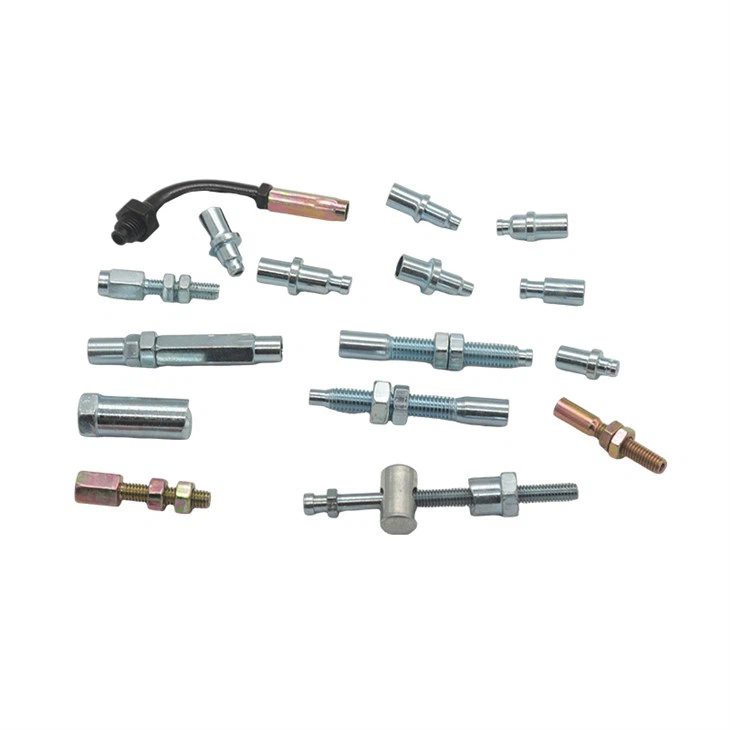
As a leading supplier of Adjustable Screw Joint, we offer a wide range of products designed to meet the diverse needs of our customers. Our adjustable screw joints are made from high-quality materials and are manufactured using state-of-the-art techniques to ensure excellent shock resistance.
We understand that every application is unique, and we work closely with our customers to provide customized solutions that meet their specific requirements. Whether you need a standard adjustable screw joint or a custom-designed solution, we have the expertise and resources to deliver the right product for your needs.
Contact Us for Procurement
If you are interested in learning more about our adjustable screw joints or would like to discuss your specific requirements, please feel free to contact us. Our team of experts is available to answer your questions and to provide you with a detailed quote. We look forward to the opportunity to work with you and to provide you with the highest quality adjustable screw joints for your applications.
References
- "Mechanical Engineering Design" by Joseph E. Shigley and Charles R. Mischke
- "Materials Science and Engineering: An Introduction" by William D. Callister Jr. and David G. Rethwisch
- "Automotive Engineering: Fundamentals, Chassis Systems, and Powertrain" by John Reece