

Hey there! As a supplier of die casting joints, I've been in the thick of the high - pressure application game for quite a while. And let me tell you, designing die casting joints for high - pressure applications is no walk in the park. There are a whole bunch of things you've got to think about to make sure the joints work well and last long.
First off, let's talk about material selection. It's super important. In high - pressure applications, the die casting joints are going to face a ton of stress. So, you need materials that can handle that pressure without deforming or breaking. Metals like aluminum, zinc, and magnesium are popular choices. Aluminum is lightweight and has good corrosion resistance. It can also withstand high temperatures to some extent. Zinc, on the other hand, is easy to cast and has excellent dimensional stability. Magnesium is the lightest of the three and has high strength - to - weight ratio. But each material has its own pros and cons. For example, aluminum might be a bit more expensive than zinc, and magnesium is more flammable during the casting process. You've got to weigh these factors based on your specific application. If you're making joints for something like Bowden Cable, which is used in automotive and other mechanical systems, you need to make sure the material can handle the vibrations and pressures it'll encounter.
Next up is the design of the joint geometry. The shape and size of the die casting joint can have a huge impact on its performance under high pressure. A well - designed joint should distribute the pressure evenly across its surface. Sharp corners and edges are a big no - no because they can cause stress concentrations. When stress builds up in one area, it can lead to cracks and failures. Instead, rounded edges and smooth transitions are preferred. Also, the thickness of the joint matters. If it's too thin, it might not be able to withstand the pressure, but if it's too thick, it can add unnecessary weight and cost. You've got to find that sweet spot. For instance, in the case of Speedometer Cable, the joint needs to be designed in such a way that it can transfer the rotational motion accurately while handling the internal pressures without any issues.
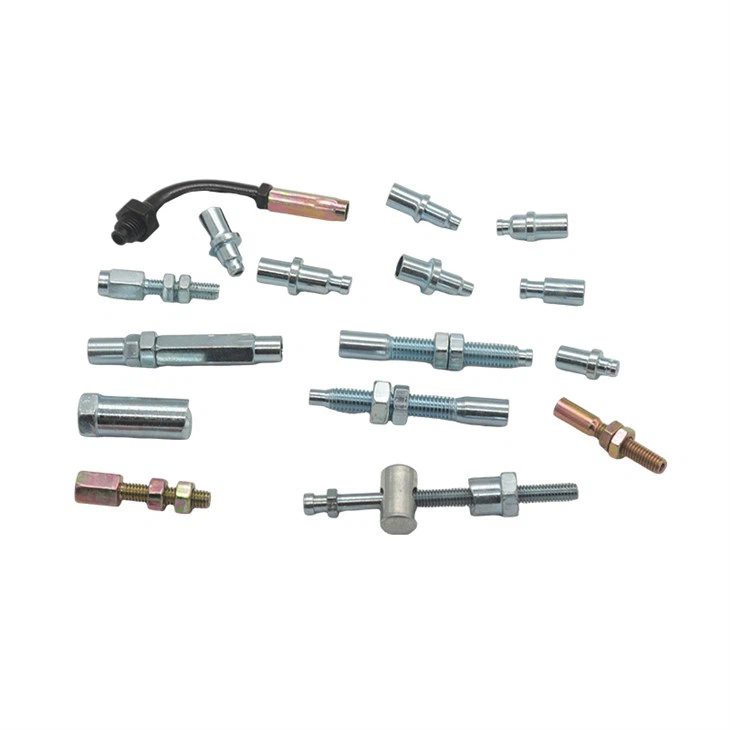
The surface finish of the die casting joint is another crucial consideration. A rough surface can cause leaks in high - pressure applications. When there are gaps or irregularities on the surface, the pressure can force the fluid or gas through those openings. So, a smooth surface finish is essential. There are different methods to achieve this, like polishing or using specific coatings. Coatings can also provide additional benefits, such as corrosion resistance. For example, if the die casting joint is going to be used in a harsh environment, a protective coating can extend its lifespan. When it comes to Cable End Fitting, a smooth surface finish ensures a tight and secure connection, preventing any loss of pressure or functionality.
Another aspect is the tolerance requirements. In high - pressure applications, even a small deviation from the design specifications can lead to big problems. You need to set tight tolerances for the dimensions of the die casting joint. This means that during the manufacturing process, strict quality control measures have to be in place. Any parts that don't meet the tolerance requirements should be rejected. For example, if the joint is supposed to fit precisely with another component, a slight variation in size can cause it to leak or not function properly.
The assembly process also plays a role in the design of die casting joints. You need to design the joints in a way that they're easy to assemble. Complicated assembly procedures can increase the chances of errors and also add to the production time and cost. For example, if the joint requires special tools or a lot of manual labor to assemble, it might not be the most efficient design. A well - designed joint should be able to be assembled quickly and accurately, reducing the overall production time and improving the quality of the final product.
Now, let's talk about the sealing mechanism. In high - pressure applications, a good sealing mechanism is a must. There are different types of seals, such as O - rings, gaskets, and metal - to - metal seals. The choice of seal depends on the application. O - rings are flexible and can provide a good seal in many situations. Gaskets are often used for larger joints and can be made from various materials, like rubber or paper. Metal - to - metal seals are more suitable for high - temperature and high - pressure applications where other seals might not hold up. You've got to design the joint in such a way that it can accommodate the chosen seal properly. For example, the groove for an O - ring needs to be the right size and shape to ensure a tight seal.
Thermal management is also something to think about. In high - pressure applications, there can be a lot of heat generated. If the die casting joint can't handle the heat, it can expand, warp, or even fail. You need to consider the thermal conductivity of the material and design the joint to dissipate heat effectively. This might involve adding fins or other heat - dissipating features. For example, in some industrial applications where the joints are exposed to high - pressure steam, proper thermal management can prevent the joint from overheating and losing its integrity.
Cost is always a factor in any design process. You've got to balance all these design considerations with the cost of production. Sometimes, using a more expensive material might be worth it if it offers better performance and durability. But in other cases, you might be able to find a more cost - effective solution by optimizing the design and using alternative materials. You need to do a cost - benefit analysis for each design decision.
In conclusion, designing die casting joints for high - pressure applications is a complex process that involves a lot of different factors. From material selection to geometry, surface finish, tolerance, assembly, sealing, thermal management, and cost, every aspect needs to be carefully considered. As a die casting joints supplier, I've seen firsthand how these design considerations can make or break a product. If you're in the market for high - quality die casting joints for your high - pressure applications, I'd love to have a chat with you. Let's discuss your specific needs and find the best solution for your project. Whether it's for Bowden Cable, Speedometer Cable, or Cable End Fitting, I'm here to help. Reach out to me, and we can start the conversation about your procurement needs.

References
- "Die Casting Handbook" by W. Daniel Hargreaves
- "High - Pressure Die Casting: Fundamentals and Applications" by various authors