

As a seasoned die casting fitting supplier, I've witnessed firsthand the intricate and fascinating world of the assembly process for these crucial components. Die casting fittings are used in a wide range of industries, from automotive to electronics, and their proper assembly is essential for ensuring optimal performance and reliability. In this blog post, I'll take you through the step-by-step assembly process for die casting fittings, shedding light on the key stages and considerations involved.
1. Preparation of Materials and Components
The assembly process begins with the careful preparation of all the necessary materials and components. This involves inspecting the die cast parts for any defects, such as cracks, porosity, or dimensional inaccuracies. We use precision measuring tools to ensure that each part meets the strict quality standards. Any parts that do not meet the specifications are rejected to prevent issues during the assembly process.
In addition to the die cast parts, we also gather all the auxiliary components, such as screws, nuts, washers, and seals. These components are typically sourced from trusted suppliers and are carefully inspected to ensure their quality and compatibility with the die cast parts. For example, when assembling Speedometer Cable, we need to make sure that the cable end fittings and other related components fit perfectly together.
2. Cleaning and Surface Treatment
Before assembly, the die cast parts are thoroughly cleaned to remove any dirt, oil, or debris that may have accumulated during the manufacturing process. This is crucial as contaminants can affect the performance and longevity of the final product. We use specialized cleaning agents and techniques to ensure that the parts are clean and ready for assembly.
In some cases, the die cast parts may also undergo surface treatment processes, such as plating or coating. Surface treatment can enhance the corrosion resistance, wear resistance, and aesthetic appearance of the parts. For example, a zinc plating can provide a protective layer on the die cast fitting, preventing it from rusting in harsh environments.
3. Assembly of Sub - Components
The next step is to assemble the sub - components. This involves joining smaller parts together to form larger, more complex units. For instance, when assembling an Adjustable Screw Joint, we first assemble the screw, the nut, and any other related parts to create a functional sub - component.
We use a variety of assembly methods, including mechanical fastening, welding, and adhesive bonding. The choice of assembly method depends on the design requirements, the materials of the parts, and the intended application of the final product. For mechanical fastening, we use tools such as screwdrivers, wrenches, and pliers to ensure that the parts are securely joined together.
4. Alignment and Positioning
Once the sub - components are assembled, they need to be accurately aligned and positioned. This is critical for ensuring the proper functioning of the die casting fitting. We use fixtures and jigs to hold the parts in place during the alignment process. These fixtures are designed to ensure that the parts are aligned to the correct specifications, with precise tolerances.
For example, in the assembly of Cable End Fitting, the cable needs to be aligned properly with the fitting to ensure a secure connection and efficient transmission of signals or forces. Any misalignment can lead to issues such as signal loss, mechanical failure, or premature wear of the components.
5. Final Assembly
After the sub - components are aligned and positioned, the final assembly takes place. This involves combining all the sub - components to form the complete die casting fitting. We follow a specific assembly sequence to ensure that each part is installed in the correct order.

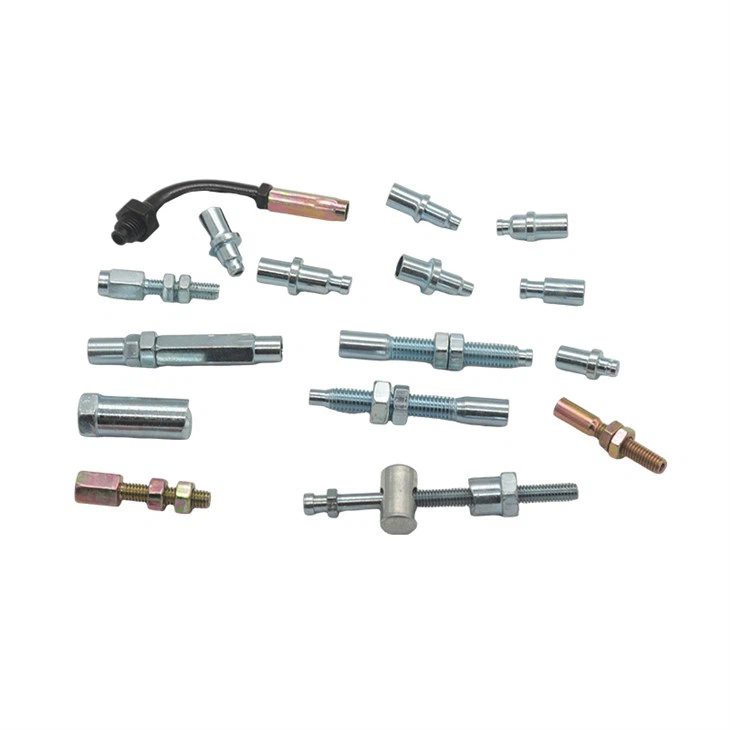
During the final assembly, we also perform quality checks at various stages. This includes visual inspections, functional tests, and dimensional measurements. For example, we may test the movement of an adjustable part to ensure that it operates smoothly within the specified range. If any issues are detected, the fitting is disassembled, and the problem is corrected before proceeding with the assembly.
6. Testing and Quality Assurance
Once the final assembly is complete, the die casting fitting undergoes a series of rigorous tests to ensure its quality and performance. These tests can include pressure tests, electrical tests, and durability tests.
Pressure tests are used to check the integrity of the fitting under different pressure conditions. This is especially important for fittings used in hydraulic or pneumatic systems. Electrical tests are conducted for fittings used in electronic applications to ensure proper electrical conductivity and insulation. Durability tests simulate the real - world usage conditions to evaluate the long - term performance of the fitting.
Only after passing all the tests does the die casting fitting receive our quality approval. We maintain detailed records of all the tests and inspections to ensure traceability and accountability.
7. Packaging and Shipping
After the die casting fitting has passed the quality assurance tests, it is carefully packaged to prevent damage during transportation. We use appropriate packaging materials, such as foam inserts, cardboard boxes, and protective wraps.
The packaging is designed to provide adequate protection while also being environmentally friendly. We label the packages clearly with information such as the product name, part number, quantity, and handling instructions. Once packaged, the fittings are ready for shipping to our customers.
Considerations in the Assembly Process
Throughout the assembly process, there are several important considerations. One of the key considerations is the compatibility of the materials. Different materials may have different expansion coefficients, which can lead to issues such as stress cracking or loosening of the joints over time. We carefully select materials that are compatible with each other to ensure the long - term stability of the fitting.
Another consideration is the ergonomics of the assembly process. We design our assembly workstations to be comfortable and efficient for our workers. This helps to improve productivity and reduce the risk of work - related injuries.
Cost - effectiveness is also an important factor. We constantly look for ways to optimize the assembly process to reduce costs without compromising on quality. This may involve streamlining the assembly sequence, reducing the number of parts, or using more cost - effective materials.
Conclusion
The assembly process for die casting fittings is a complex and precise operation that requires careful planning, skilled labor, and strict quality control. As a die casting fitting supplier, we are committed to providing our customers with high - quality products that meet their specific requirements.
If you are in the market for die casting fittings and are interested in learning more about our products or discussing your specific needs, we invite you to contact us for a procurement negotiation. Our team of experts is ready to assist you in finding the best solutions for your applications.
References
- "Die Casting Handbook" by A. K. Dahle, M. Tangstad, and H. Westengen
- "Manufacturing Engineering and Technology" by S. Kalpakjian and S. R. Schmid
- Industry standards and guidelines related to die casting and fitting assembly